



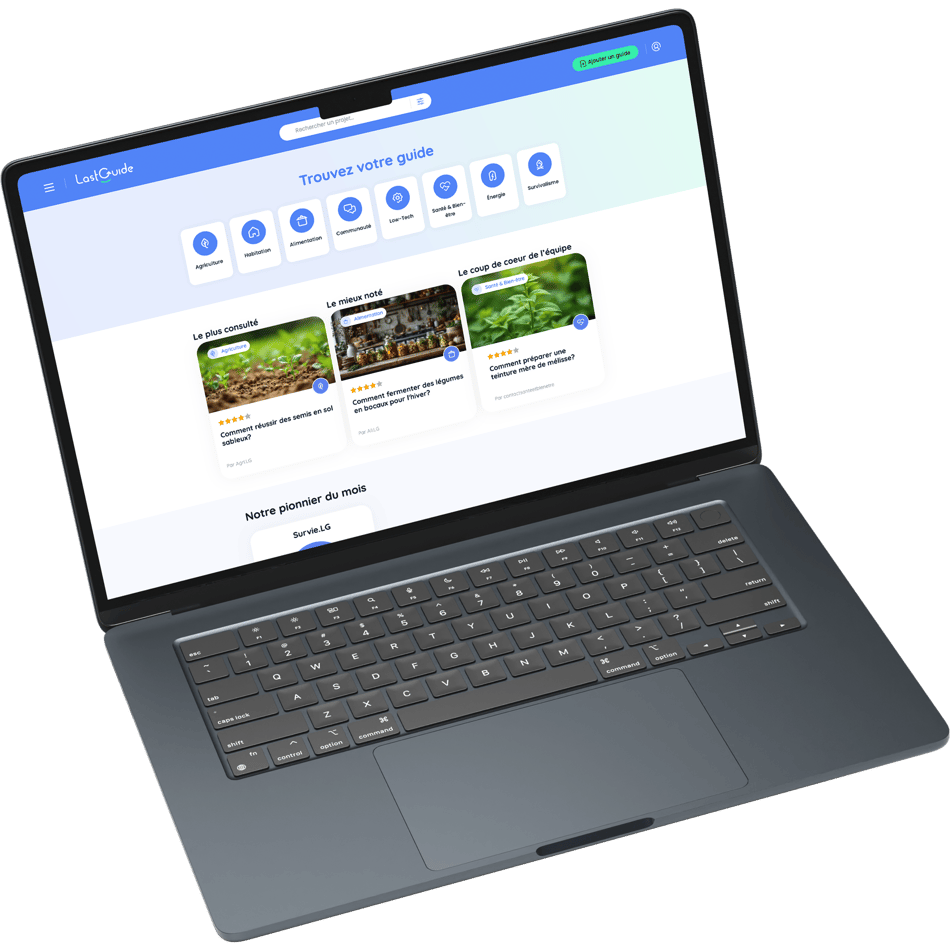
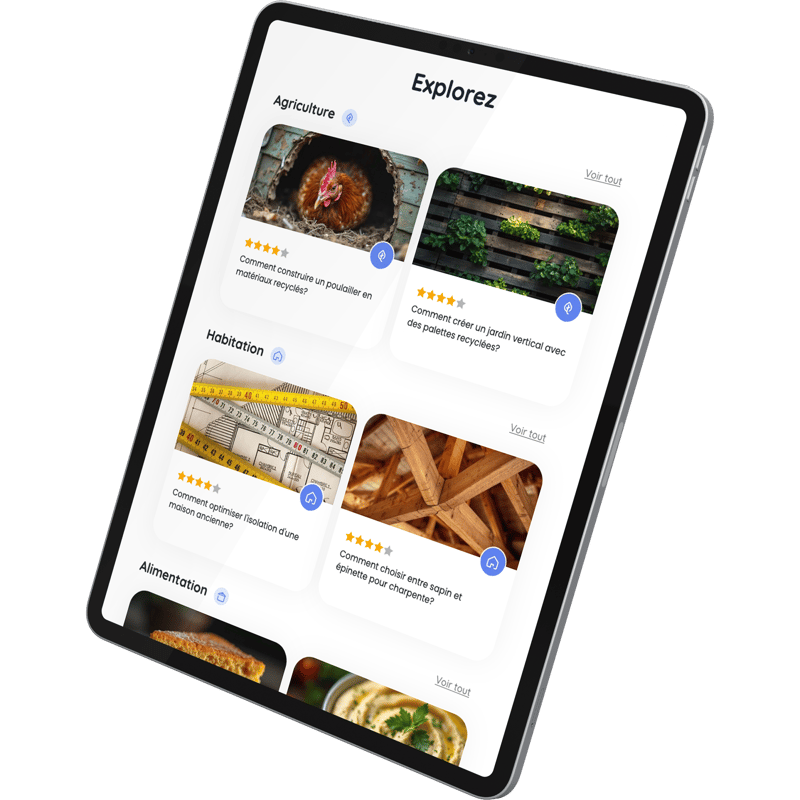
LastGuide connects individuals pursuing self-sufficiency and alternative lifestyles through a collaborative platform for practical DIY guides. Building this knowledge-sharing ecosystem required translating values around autonomy, sustainability, and community resilience into functional architecture that could support user-generated tutorials across survivalism, low-tech solutions, ecological agriculture, and alternative construction while maintaining both quality control and discoverable content organization throughout a growing library.
Platforms:
Web, Mobile, Desktop, Tablet
Deliverables:
Website, CMS, Web Design, Administration Interface
Tech stack:
drupalSymfony
Understanding the challenge
Knowledge-sharing platforms centered on practical skills must balance open contribution models against content quality standards. This balance becomes particularly complex when differentiating between general visitors browsing guides, community members contributing tutorials, and moderators maintaining editorial standards.
Adding to this complexity, the platform needed to organize diverse content spanning multiple domains—from wilderness survival techniques to permaculture methods—through taxonomy systems that enable intuitive discovery without creating overwhelming category hierarchies. These editorial workflows would need to facilitate community submissions through appropriate review stages while preserving the platform's overall credibility.
Finding the right solution
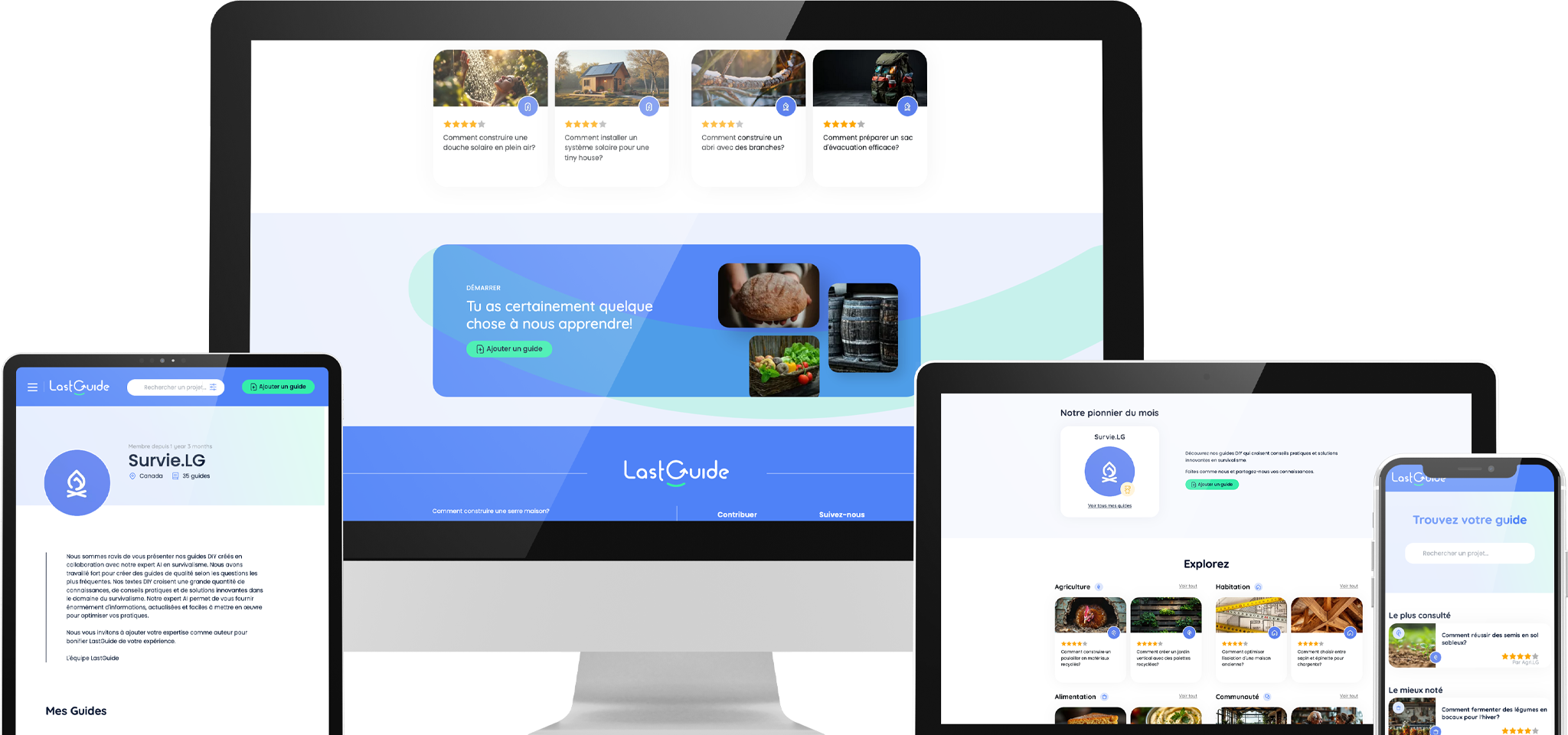
Rollin built LastGuide on Drupal 10, applying Symfony's structural principles to manage this inherent complexity across multiple content types and user interactions. At the foundation level, granular permission controls separate browsing, authoring, and moderation capabilities according to assigned roles. Building on this structure, multi-stage editorial workflows route community-submitted guides through defined review processes before publication.
The taxonomy architecture then implements compound filtering, which allows visitors to discover step-by-step tutorials through parallel classification schemes spanning topics, difficulty levels, and resource requirements. Throughout this development process, platform migration from Drupal 8 to 10 occurred during active operation, requiring carefully phased execution to preserve existing guide content while maintaining uninterrupted community access.
Delivering outstanding results
LastGuide's technical infrastructure now supports sustained community growth and content expansion fully aligned with its knowledge-sharing mission. The permission systems maintain appropriate access boundaries across user categories without creating administrative bottlenecks, while editorial workflows process community contributions efficiently through quality checkpoints.
Meanwhile, compound filtering provides multiple discovery paths suited to different visitor needs and skill levels. Following the successful Drupal 10 migration—completed with full data preservation—the platform now operates on modernized foundations that support continued feature development and deeper community engagement.
Controlled Access Across Visitor and Contributor Types
Efficient Community Content Review Processes
Multiple Guide Discovery Pathways by Topic and Skill Level
Zero Data Loss During Platform Modernization
Case studies